7 Essential Off-Road Driving Skills Every Beginner Should Learn Before Exploring the Sierra Nevada
There's something special about leaving the pavement behind in the Sierra Nevada. The crowds thin out, the scenery changes, and familiar mountain landscapes begin to reveal places most visitors never experience.
Whether you're exploring forest roads near Yosemite, heading into the mountains along Highway 108, or simply trying to become more comfortable driving your AWD SUV or 4WD truck, venturing beyond the pavement opens up a different kind of adventure.
But owning a capable vehicle and knowing how to use it are two very different things.
After more than 40 years of off-road driving, exploring the Sierra Nevada backcountry, and learning from changing terrain and conditions, one lesson continues to stand out: Good off-road driving is less about conquering obstacles and more about understanding your vehicle, reading the terrain, and making sound decisions.
Before your next backroad adventure, here are seven essential skills worth developing.
1. Learn to Read the Terrain Before Driving It
One of the most valuable off-road driving skills happens before your vehicle ever moves forward.
Experienced drivers learn to recognize potential hazards by studying the terrain ahead. Loose rocks, deep ruts, uneven surfaces, exposed roots, sand, mud, and steep grades can all affect how a vehicle responds.
Something that looks relatively easy from behind the steering wheel may look entirely different when you step outside and examine it.
Before approaching unfamiliar terrain, consider:
Where will your tires travel?
Is there enough ground clearance?
Could the vehicle lose traction or become high-centered?
Is there a safer line around the obstacle?
What happens if you need to stop or turn around?
One of the smartest off-road decisions you can make is knowing when to get out and look.
Walking a questionable section before attempting it can prevent unnecessary vehicle damage, difficult recoveries, and potentially dangerous situations.
2. Understand How Traction Really Works
Four-wheel drive and all-wheel drive can improve a vehicle's ability to distribute power, but neither system guarantees traction.
Your tires still need sufficient grip against the surface beneath them.
Loose gravel, wet rocks, mud, snow, sand, and uneven terrain all create different traction challenges. Understanding how your vehicle responds to these surfaces is far more useful than simply assuming that engaging 4WD will solve the problem.
Smooth, deliberate inputs are often more effective than aggressive acceleration.
Sudden throttle changes can cause wheelspin, reduce control, and damage the road surface. Learning to recognize when a tire is beginning to lose grip—and how to respond appropriately—is an essential part of becoming a confident driver.
The goal isn't to use more power. It's to use the available traction more effectively.
3. Develop Proper Tire Placement and Vehicle Awareness
Where you place your tires can determine whether an obstacle is straightforward, difficult, or potentially damaging.
Rocks, ruts, washouts, and uneven ground require an understanding of your vehicle's dimensions and clearance.
Three important concepts are:
Approach angle: How steep an obstacle your vehicle can approach without contacting the front bumper or underbody.
Breakover angle: How much clearance your vehicle has when passing over a raised obstacle between the axles.
Departure angle: How steep an obstacle your vehicle can leave without contacting the rear of the vehicle.
Wheelbase, suspension, tires, and ground clearance all influence these capabilities.
A line that works well for one vehicle may be inappropriate for another.
This is one reason learning in your own vehicle is so valuable. You begin to develop an understanding of its actual capabilities rather than relying on what another vehicle can do.
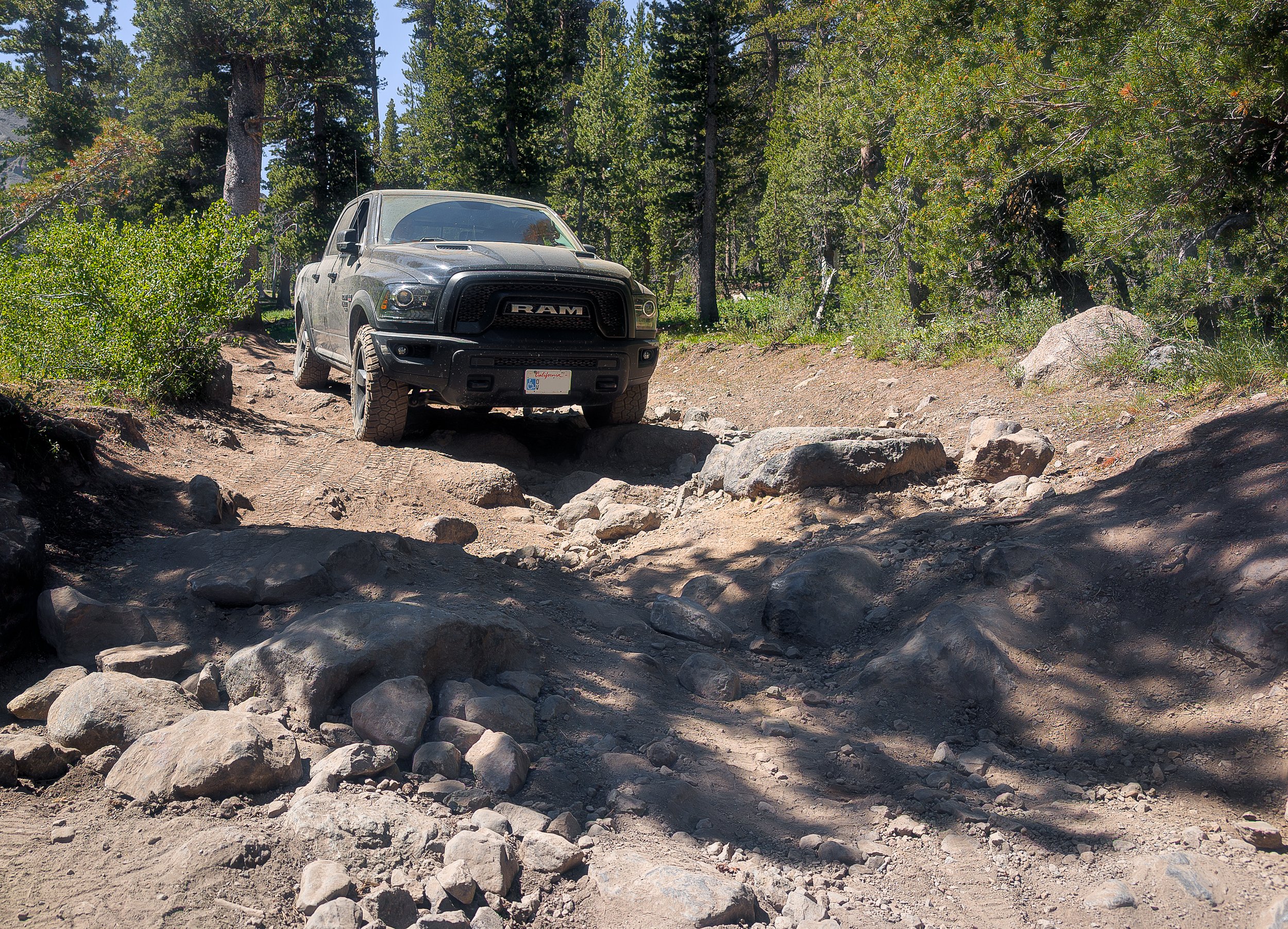
Understanding tire placement, ground clearance, and vehicle control is essential when navigating rocky Sierra Nevada backroads.
4. Master Controlled Throttle and Braking Techniques
Driving off-road requires a different approach to vehicle control than driving on pavement.
On loose or uneven surfaces, abrupt steering, acceleration, or braking can quickly upset the vehicle's balance or reduce traction.
A controlled approach generally involves maintaining an appropriate speed, using smooth inputs, and allowing the vehicle to respond predictably to changing terrain.
Descending a steep grade introduces additional considerations.
Depending on the vehicle and conditions, selecting an appropriate low gear, using engine braking, or engaging an available hill-descent control system can help maintain a controlled descent.
The correct technique depends on the vehicle, its drivetrain, the surface, and the terrain.
Understanding how your specific vehicle behaves is more important than memorizing one technique and applying it everywhere.
5. Know When and How to Use Your Vehicle's AWD or 4WD Systems
Modern vehicles offer an increasingly wide range of traction and drivetrain technologies.
Some have traditional part-time four-wheel drive with high- and low-range gearing. Others use full-time 4WD, automatic AWD systems, electronic traction controls, locking differentials, or selectable terrain modes.
These systems do not all operate the same way.
For example, a part-time 4WD system may require specific conditions for engaging four-wheel drive, while some AWD systems distribute power automatically.
Improper use of certain drivetrain settings can reduce vehicle control or cause mechanical damage.
Before exploring challenging terrain, understand:
Whether your vehicle has AWD, part-time 4WD, or full-time 4WD.
When and how to engage available drive modes.
Whether low-range gearing is available.
How the traction control system responds to wheelspin.
Whether your vehicle has differential locks or terrain-management features.
What limitations the manufacturer specifies for each system.
Your owner's manual is an important starting point, but understanding how these features work in real-world conditions can make a significant difference.
6. Recognize When to Stop, Turn Around, or Ask for Help
Perhaps the most underrated off-road skill is knowing when not to continue.
A road that begins as a relatively smooth forest route can quickly change because of erosion, fallen trees, snow, mud, steep terrain, or storm damage.
Conditions in the Sierra Nevada can vary significantly with elevation, season, and weather.
A route that was accessible earlier in the year may become impassable after a storm or during seasonal transitions.
Before committing to difficult terrain, ask yourself:
Can I safely continue?
Do I have a reliable way to turn around?
What happens if the road becomes more difficult?
Is my vehicle adequately equipped for the conditions?
Do I have the experience and resources to handle an unexpected problem?
Turning around is not a failure. It's often the decision that demonstrates the greatest experience and judgment.
A successful off-road adventure is one where you, your passengers, and your vehicle return safely.
7. Prepare for the Unexpected Before Leaving Pavement
Even a relatively easy forest road can become challenging when something goes wrong.
A flat tire, mechanical problem, unexpected weather, or loss of cellular service can quickly turn a casual outing into a difficult situation.
Before heading into remote areas, consider carrying:
A properly inflated spare tire (ideally the same size as your regular tires) and the equipment needed to change it.
Water, food, and appropriate clothing for changing conditions.
A first-aid kit.
Offline maps and reliable navigation information.
A flashlight or headlamp.
Basic vehicle tools and emergency supplies.
Appropriate communication equipment for remote travel.
Recovery equipment can also be valuable, but it requires training and an understanding of its limitations. Improper recovery techniques can cause serious injuries or vehicle damage.
Equally important is knowing where you're going and communicating your plans to someone who isn't traveling with you.
Preparation doesn't eliminate every risk, but it gives you more options when conditions change.
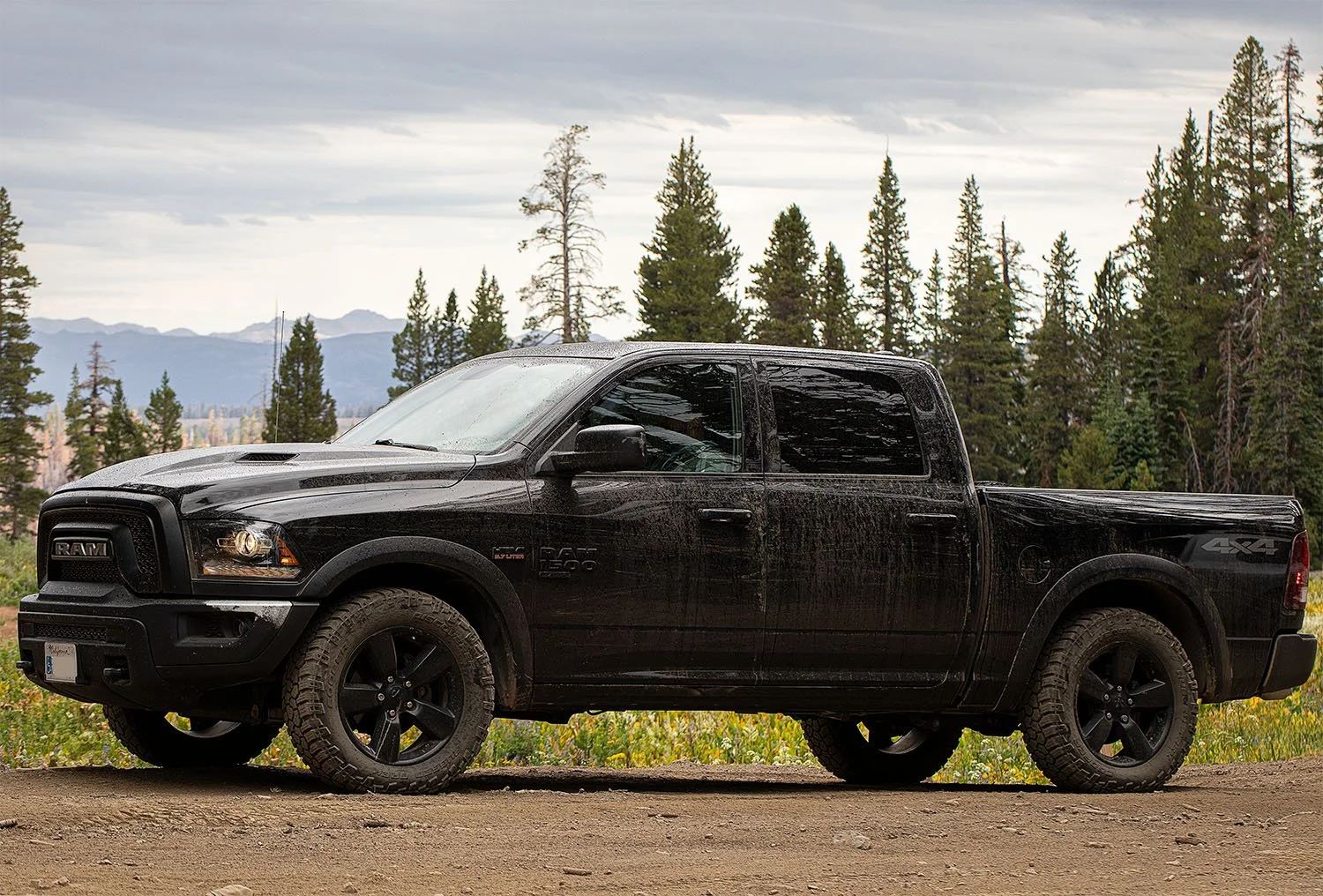
Exploring the Sierra Nevada's scenic backroads begins with preparation, responsible driving, and knowing your vehicle's capabilities.
Why Sierra Nevada Backroads Deserve Special Respect
The Sierra Nevada offers remarkable opportunities for backcountry exploration, particularly throughout Tuolumne County and the Highway 108 corridor near Yosemite.
But forest roads are not maintained or managed like paved highways.
Seasonal snow, erosion, changing weather, and varying road surfaces can create unexpected challenges. Some routes are suitable for ordinary passenger vehicles, while others require higher-clearance or more capable vehicles.
Before traveling on National Forest System roads, consult the applicable U.S. Forest Service Motor Vehicle Use Map (MVUM) and current closure information.
An MVUM identifies routes designated for particular types of motorized travel, but it does not guarantee that a road is currently passable or appropriate for your vehicle.
Stay on designated routes, respect seasonal closures, avoid damaging road surfaces, and never assume that an existing tire track means a route is legal or safe to drive.
Responsible off-road travel helps protect the forest and preserve access for everyone.
Why Learning in Your Own Vehicle Makes a Difference
No two vehicles behave exactly alike.
A Toyota 4Runner, Jeep Wrangler, Subaru Outback, and full-size 4WD pickup may approach the same terrain very differently.
Vehicle weight, wheelbase, tires, suspension, ground clearance, drivetrain systems, and driver experience all influence what a vehicle can safely accomplish.
Learning in your own vehicle allows you to develop practical familiarity with its specific characteristics.
Instead of simply watching someone else navigate an obstacle, you begin to understand how your vehicle responds to changing terrain, traction, and driver inputs.
That knowledge can help you make better decisions long after the lesson is over.
Private Off-Road Training in the Sierra Nevada Near Yosemite
At Ikigai Adventure Tours, We offer private AWD and 4WD driving instruction in the Sierra Nevada, with training tailored to the driver, vehicle, and experience level.
Based near Twain Harte in Tuolumne County, the training emphasizes practical driving skills, vehicle awareness, terrain assessment, and sound decision-making on appropriate forest roads.
Participants drive their own California street-legal AWD or 4WD vehicles, allowing instruction to focus on the equipment they'll actually use on future adventures.
Whether you've recently purchased your first off-road-capable SUV or want to become more comfortable exploring Sierra Nevada backroads, the objective is the same: to develop useful skills and greater confidence through personalized instruction.
Explore Ikigai Adventure Tours' Private Off-Road Training to learn more about the experience and how to inquire about a session.
Frequently Asked Questions About Beginner Off-Road Driving
Do I need previous off-road driving experience to take a private lesson?
No. Private instruction can be adapted to beginners who have never driven beyond pavement, as well as drivers who already have some experience and want to improve specific skills.
Can I learn off-road driving in an AWD SUV?
Many AWD vehicles can travel on suitable unpaved roads, but their capabilities vary significantly. Ground clearance, tires, drivetrain design, and road conditions all matter. Instruction should be matched to the vehicle's actual capabilities rather than assuming every AWD vehicle can handle the same terrain.
Is 4WD necessary for exploring Sierra Nevada forest roads?
Not every forest road requires 4WD. Some designated roads are suitable for ordinary passenger vehicles under appropriate conditions. Others may require higher clearance, additional traction, or specialized driving skills. Always evaluate the route, current conditions, and your vehicle before traveling.
Where can I take private off-road driving lessons near Yosemite?
Ikigai Adventure Tours provides private AWD and 4WD driving instruction in the Sierra Nevada's Tuolumne County region near Yosemite. Participants use their own street-legal vehicles, and instruction is tailored to individual experience and vehicle capability.
What's the most important skill for a new off-road driver?
Good judgment. Understanding when to proceed, when to inspect the terrain, and when to turn around is more valuable than simply knowing how to negotiate difficult obstacles.
Confidence Comes from Understanding, Not Just Experience
One of the greatest rewards of exploring the Sierra Nevada is discovering how much there is to see beyond the pavement.
But meaningful off-road confidence doesn't come from driving the most difficult trail or pushing a vehicle to its limits.
It comes from understanding the terrain, recognizing your vehicle's capabilities, practicing sound techniques, and knowing how to make good decisions when conditions change.
Those skills make every backroad adventure more enjoyable—and help ensure the places we explore remain accessible and protected for future generations.
Courtney Risdon is the owner and lead guide of Ikigai Adventure Tours Inc., providing private off-road driving instruction and guided outdoor experiences in California's Sierra Nevada.
His background includes more than 40 years of off-road and backcountry experience, competitive driving, and professional driving instruction programs.